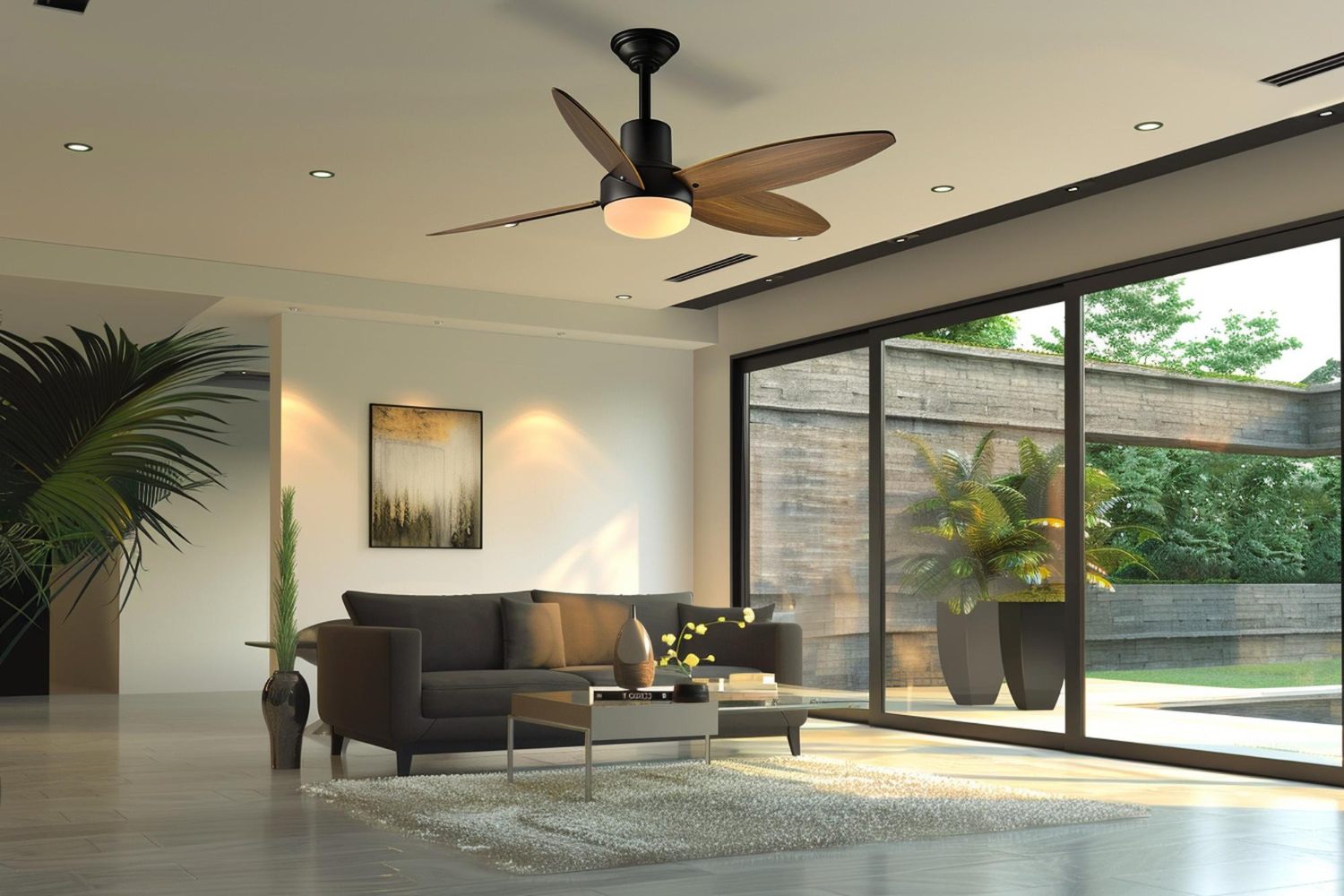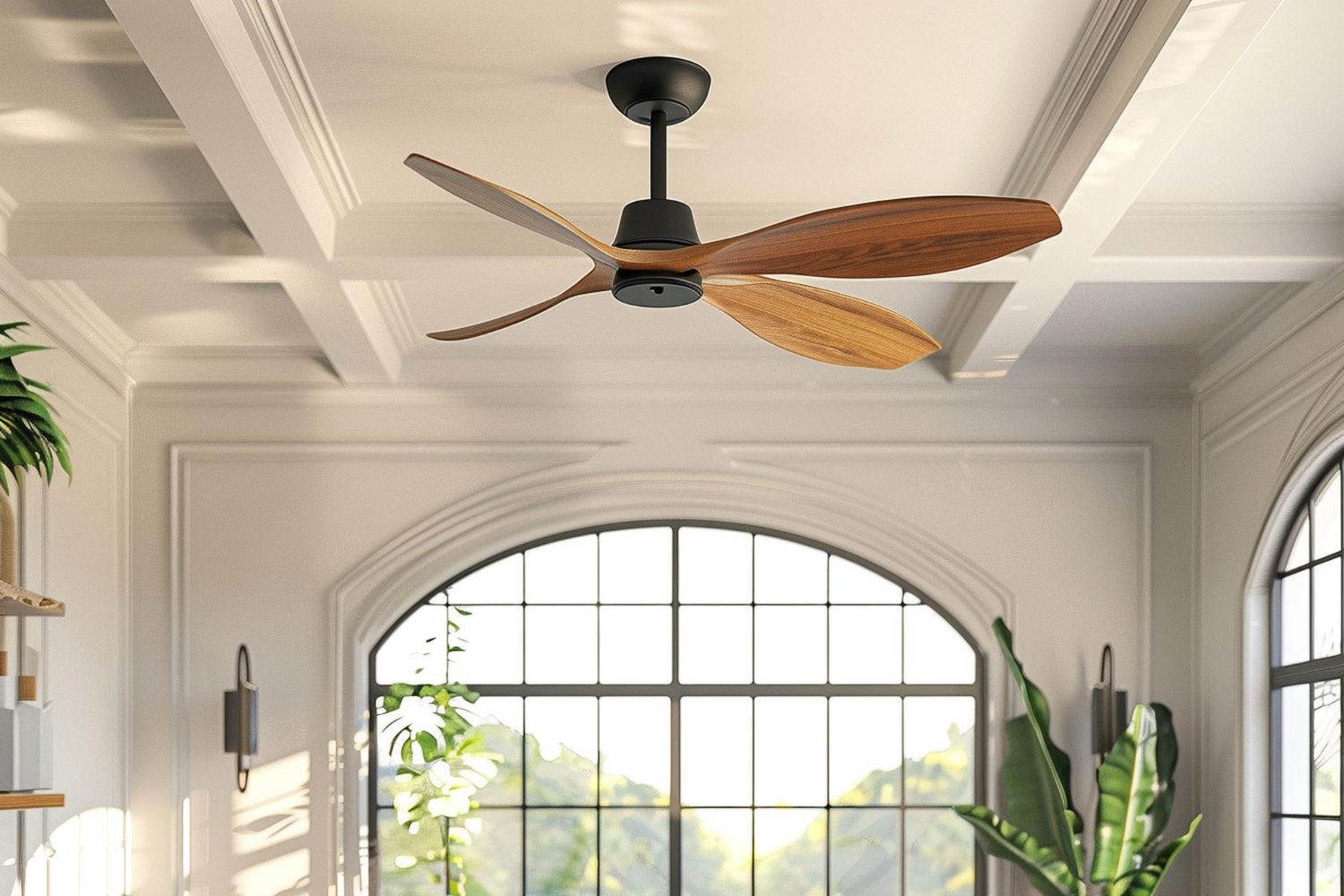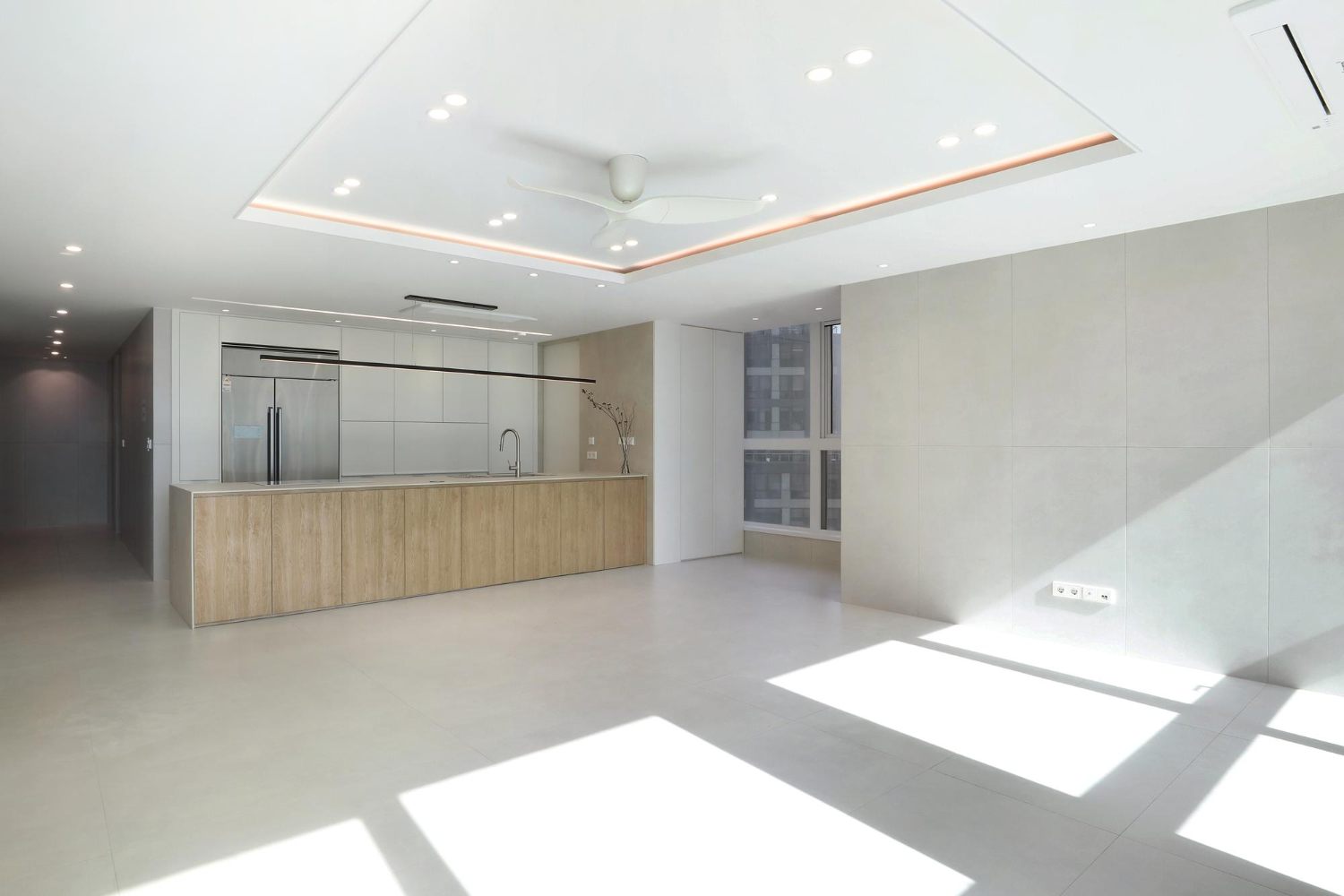
Fan sizing advice is often reduced to a chart that matches room area with blade span. That can be helpful for a first shortlist, but it cannot see the shape of the room, a low beam, tall cabinetry, a sloping ceiling, or the place where people actually spend time. Those details can change what feels comfortable.
The goal is not to install the largest fan that fits. It is to select a proportionate model that can move air through the occupied zone without crowding the ceiling or creating awkward clearance around walls, lights, and furniture.
Start by measuring the usable room
Record the room length and width, then note whether the space is a simple rectangle or connected to another area. An open living and dining room may have two activity zones even when it appears as one large floor area. One centrally placed fan may not serve both zones equally.
Mark fixed features such as beams, pendant lights, built-in cabinets, curtains, sprinkler heads, and air-conditioning grilles. Measure ceiling height at the proposed fan position. Photographs are useful when discussing the room with an installer, but dimensions should be written down rather than estimated from an image.
What blade span tells you
Blade span is normally the diameter of the circle formed as the blades rotate. It helps describe the physical reach of a ceiling fan, but not its complete airflow performance. Blade pitch, shape, motor behaviour, rotation speed, and mounting conditions also matter.
A broad span may distribute air over a wider area at a moderate speed. A smaller fan may suit a bedroom, study, or compact dining zone where the occupied area is limited. Product-specific recommendations should be considered alongside room measurements because manufacturers may design similar spans for different performance ranges.
The separate guide to fan blade size and airflow explains why blade count and dramatic shapes should not be used as simple performance shortcuts.
Ceiling height and vertical clearance
The fan must be positioned with safe clearance from the floor and surrounding objects. Low-profile models may help where ceilings are lower, while high or sloping ceilings may require a compatible downrod or mounting arrangement. Extending a fan lower can bring it into the occupied air zone, but it also changes safety clearances and visual proportion.
Do not improvise a downrod, bracket, or mounting method. Confirm that the components are approved for the model and that the ceiling structure can support the moving load. A qualified installer should assess unusual ceilings, replacement points, or uncertain supports.
Think in occupied zones, not empty floor area
A bedroom fan is usually centred in relation to the bed and safe clearances, while a living-room fan may need to serve seating rather than a walkway. In dining spaces, check the relationship between the fan, table, and pendant lighting. In a long room, two smaller fans may distribute air more evenly than one large fan at the geometric centre.
Also consider doors and windows. Natural cross-ventilation, afternoon sun, and air-conditioning use can change when and how the fan runs. A fan used mainly with air conditioning may operate at lower speeds to circulate conditioned air, while a naturally ventilated room may need a broader usable speed range.
Verify before purchase
Once you have a likely size, compare exact overall dimensions, drop from ceiling, control receiver requirements, and minimum clearances in the product documentation. Ask whether the light kit, if present, changes the total drop. Check whether replacement remotes and relevant parts are available.
Apartment owners should also consider building rules and access. Management approval, permitted working hours, lift protection, or restrictions on drilling may affect installation. In a landed home, a porch or semi-outdoor location requires a model specifically rated for that environment; a normal indoor fan should not be selected merely because its finish appears weather-resistant.
For a replacement, measure the existing fan but do not assume its size was correct. Note any wobble, weak zones, or uncomfortable high-speed airflow in the current arrangement. Those observations explain what the new choice needs to improve and can be more useful than copying the old span.
Then return to the broader designer fan buying guide to compare motor type, controls, finish, warranty, and installation scope. Size narrows the field; it does not complete the decision.
Plan for how the room changes
Furniture layouts are not always permanent. A nursery may become a study, or a dining table may move when an open-plan area is renovated. Choose a position that serves the likely long-term zone rather than one temporary furniture arrangement. Where future use is uncertain, flexible speed control and balanced coverage may be more valuable than highly focused airflow.