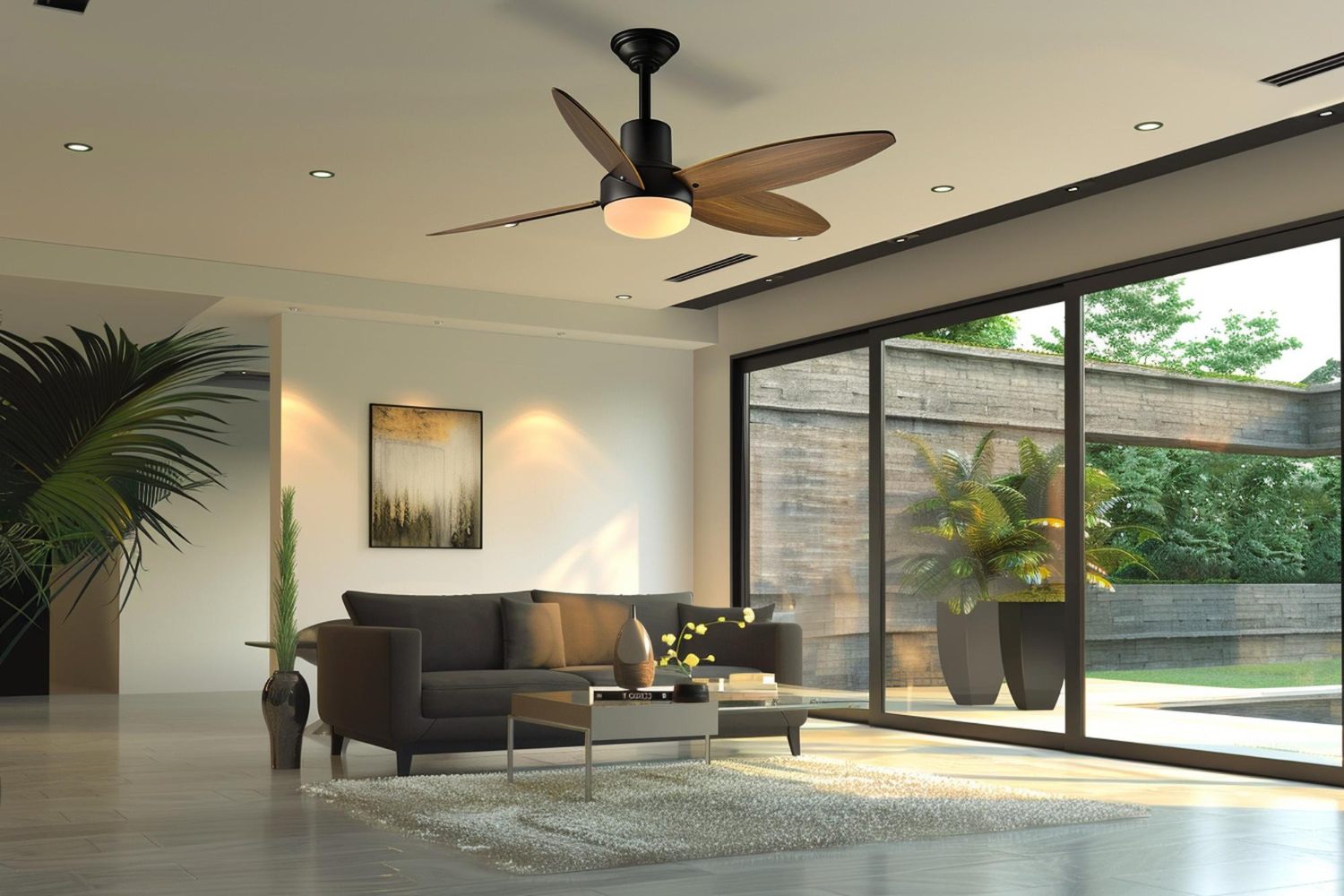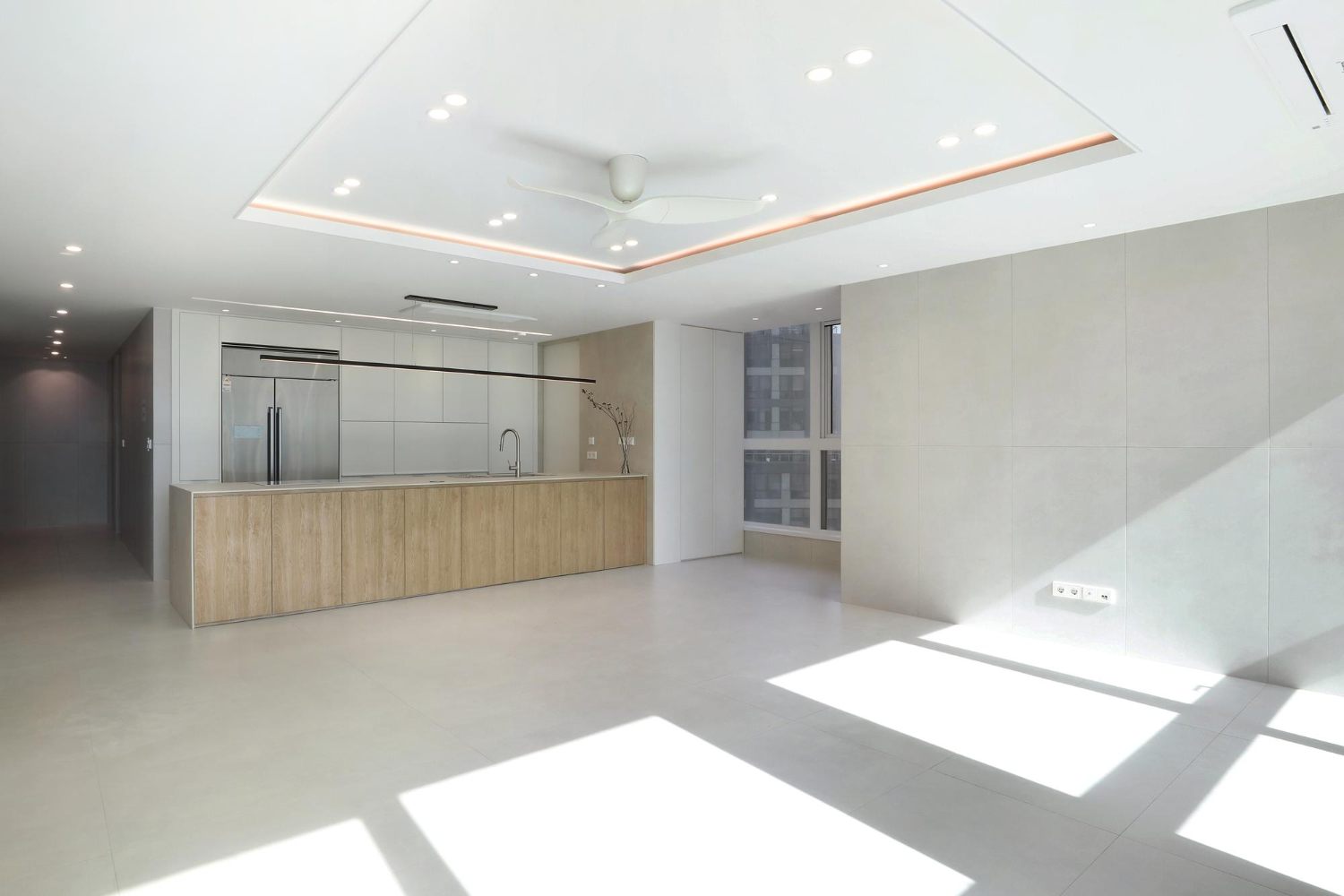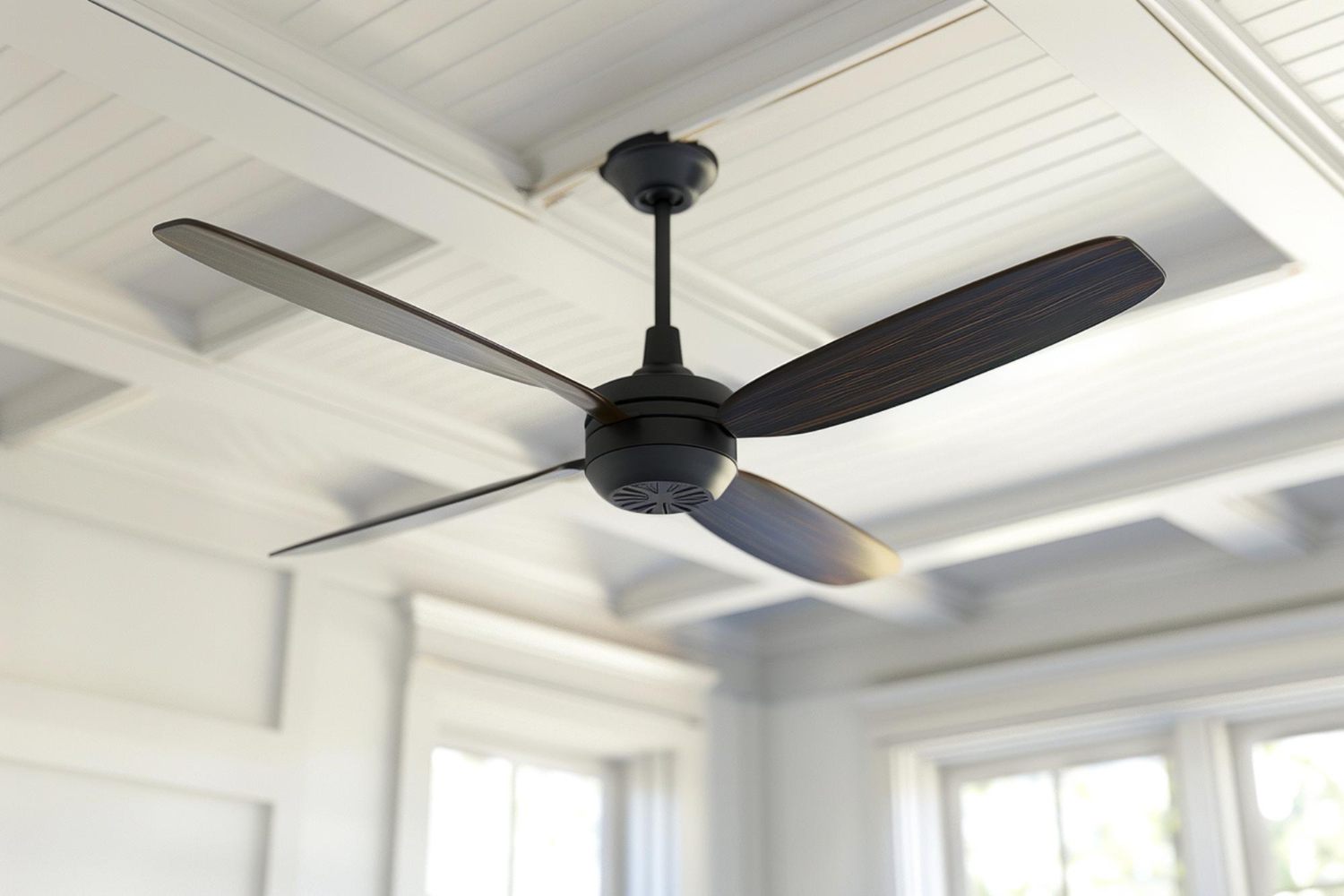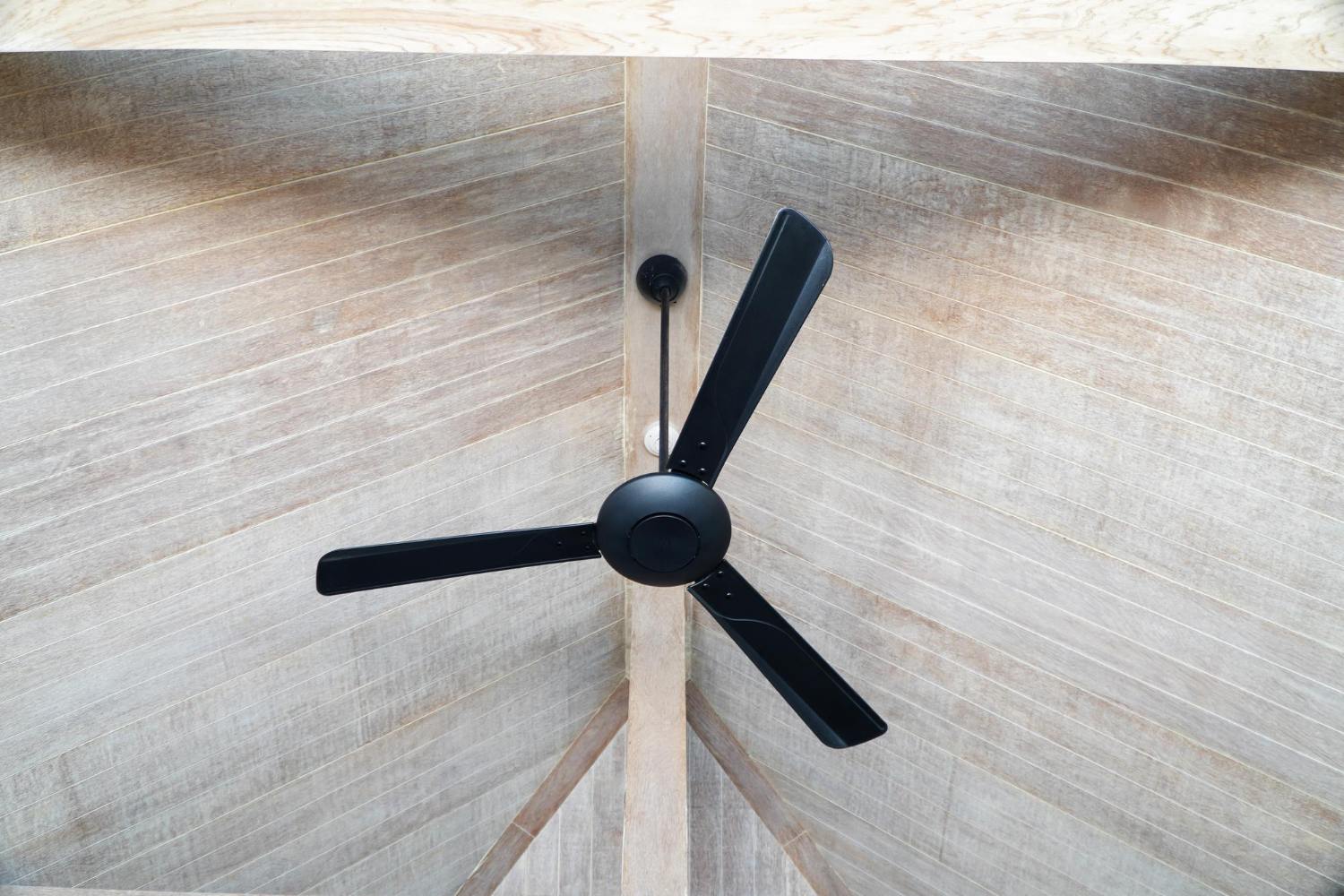
Fan blades attract attention because they determine much of a fan's silhouette. Broad timber-look blades can feel warm and architectural, while slim blades create a lighter, more technical appearance. It is tempting to turn those visual differences into simple performance rules, but airflow is produced by the complete fan.
Blade span, number, pitch, material, motor output, rotation speed, mounting height, and room conditions work together. Understanding the role of each factor helps shoppers ask better questions without trying to judge performance from photographs alone.
Blade span describes physical reach
For a conventional ceiling fan, blade span is the diameter of the circle traced by the rotating blades. A larger span can cover a broader area, which may allow comfortable distribution at a moderate speed. That does not mean every large fan produces more useful airflow than every smaller one.
The fan must still fit the room with safe clearance. A broad model placed too close to a wall, beam, or tall cabinet may not operate as intended and can look out of proportion. Use the room sizing guide to connect physical span with room shape and mounting position.
More blades do not automatically mean more air
Three-, four-, five-, and multi-blade fans are available in many styles. Blade count affects appearance, loading, and aerodynamic design, but it is not a standalone airflow score. A well-engineered three-blade fan may move more air than a decorative five-blade model, or the reverse may be true.
Do not compare blade count without the model's stated performance information. If airflow data is provided, check the unit and test context so that two figures are genuinely comparable. Retail descriptions such as strong wind or powerful breeze are less useful than consistent specifications.
Pitch, shape, and material
Blade pitch describes the angle at which a blade meets the air. Shape controls how air travels across the blade, while stiffness helps it retain the intended profile during operation. These factors are designed together with the motor and speed range; one impressive-looking angle does not prove superior performance.
Materials also influence weight, finish, and response to the environment. The product should be rated for its intended indoor, covered, damp, or outdoor location. A material that looks suitable for a balcony is not necessarily approved for moisture exposure.
Unusual sculptural blades can be a valid design choice when the underlying specifications meet the room's needs. The fan design and interior guide explains how to balance visual presence with proportion.
The room changes the result
A fan tested in controlled conditions may feel different after installation. Ceiling height, mounting drop, nearby walls, open doors, furniture, and air-conditioning grilles influence air movement. People also perceive airflow differently depending on where they sit and how fast the fan runs.
In an open-plan space, one airflow figure cannot reveal whether the dining table and sofa both receive a useful breeze. Map occupied areas and consider whether two fans or a portable supplementary fan would offer better control.
Airflow can also interact with lightweight objects and activities. Strong downward movement may disturb papers at a desk, cool food rapidly at a dining table, or feel distracting directly over a bed. The useful setting is therefore not always the highest available one. A broad range of controllable speeds often matters more than an impressive maximum figure.
Cleaning and balance affect performance
Dust buildup changes the surface of the blades and can make a fan look neglected, particularly on dark or sculpted finishes. Follow the cleaning instructions and support each blade carefully rather than bending it. Uneven handling, loose fasteners, or damaged blades can contribute to wobble.
If a newly installed fan moves excessively, produces a repeated clicking sound, or appears uneven, switch it off and ask the installer to check the mounting and balance. Do not attach decorative weights or modify blades without approved instructions. A stable installation protects both comfort and the intended appearance.
A better way to compare fan performance
Shortlist fans that physically fit, then compare stated airflow, power input, speed range, noise information, controls, and warranty. Ask whether published figures refer to maximum speed and whether lower-speed data is available. A fan used overnight may be judged more by comfortable low-speed airflow than by its maximum output.
Motor and control behaviour also affect the usable range. Review the DC versus AC ceiling fan comparison, then use the main designer fan guide to combine performance with installation and finish.
When a showroom demonstration is available, stand at more than one distance and try several speeds. The room will not match your home, but the test can reveal control delay, speed transitions, sound character, and the physical scale of the fan. Treat the demonstration as one observation, not a substitute for specifications.