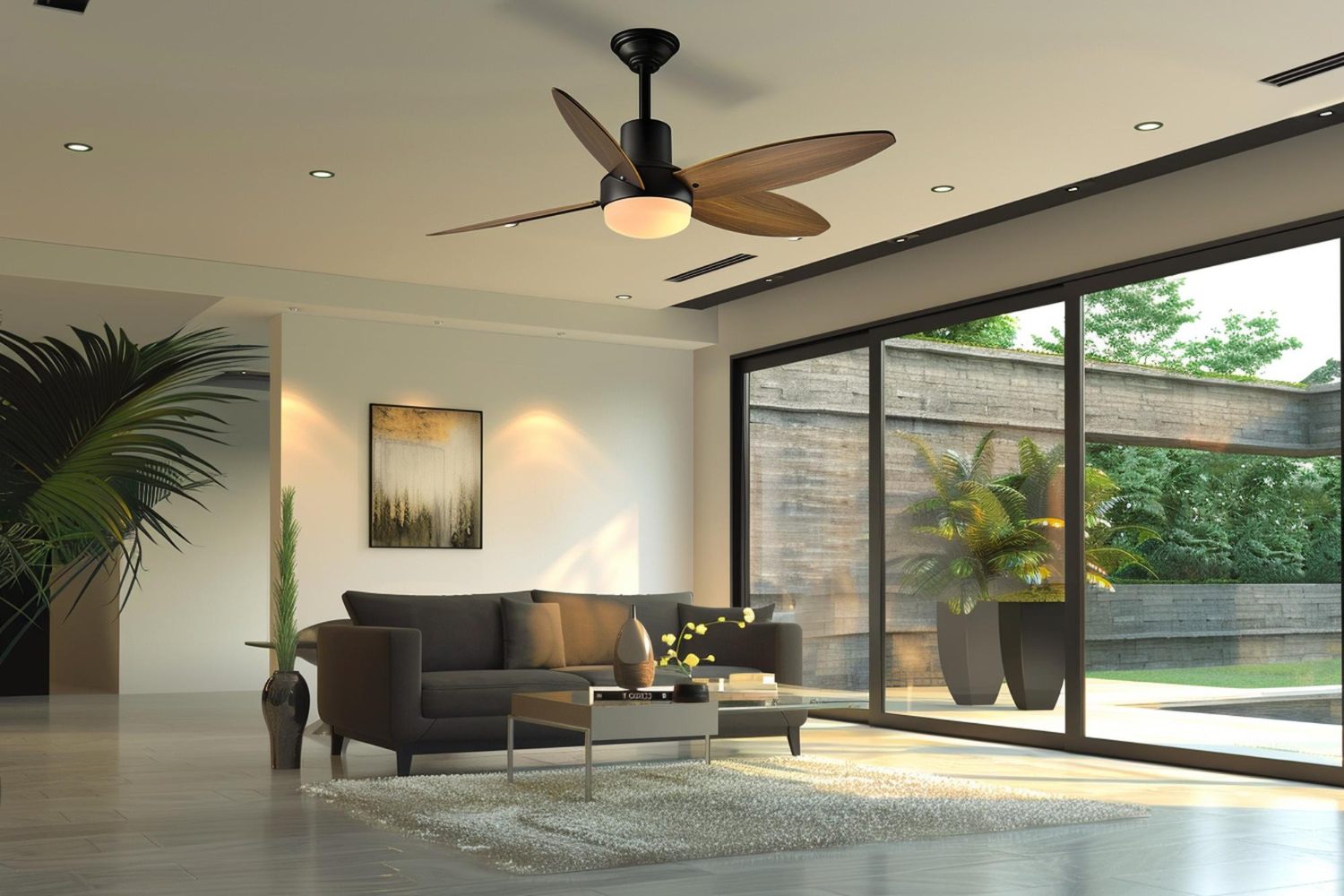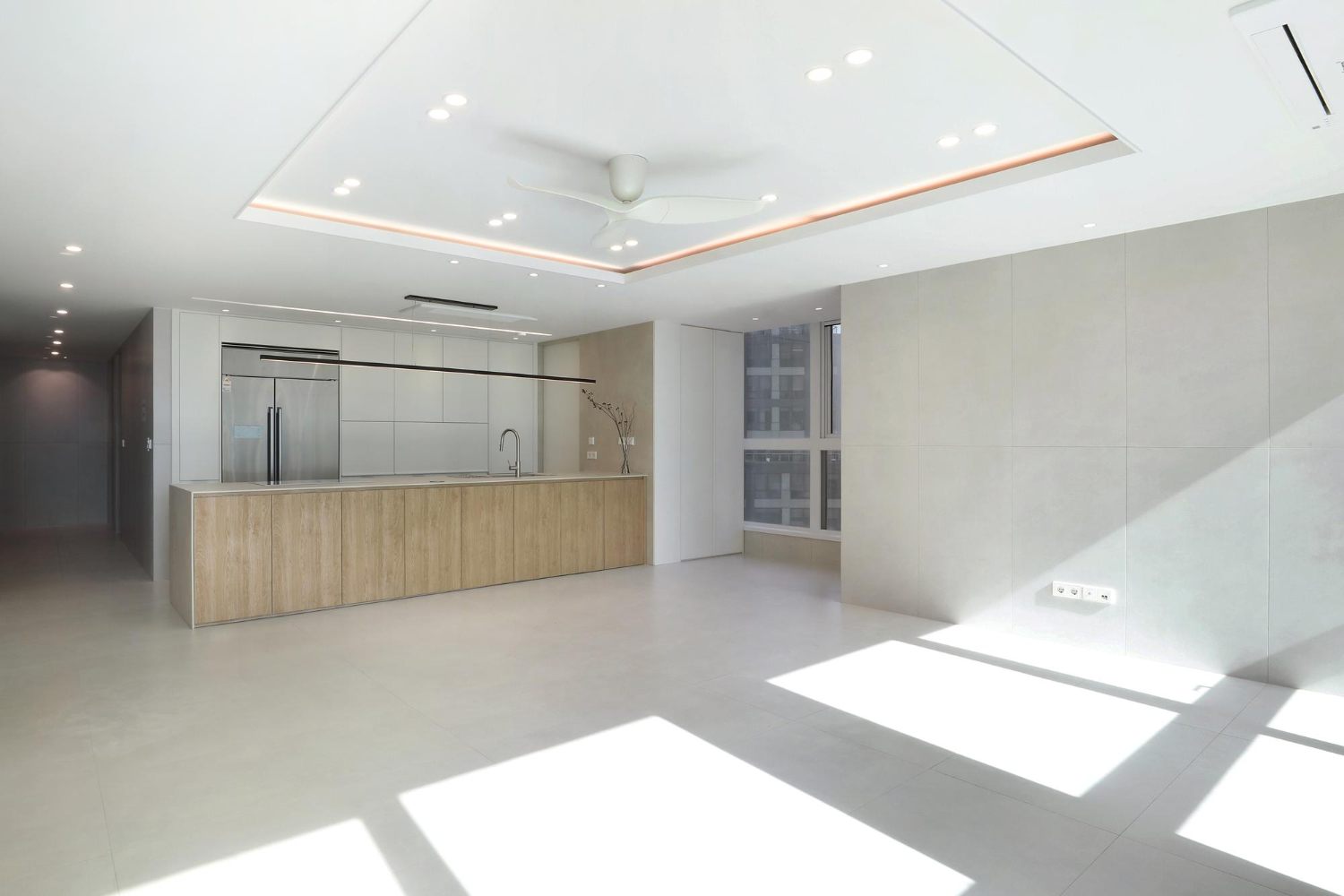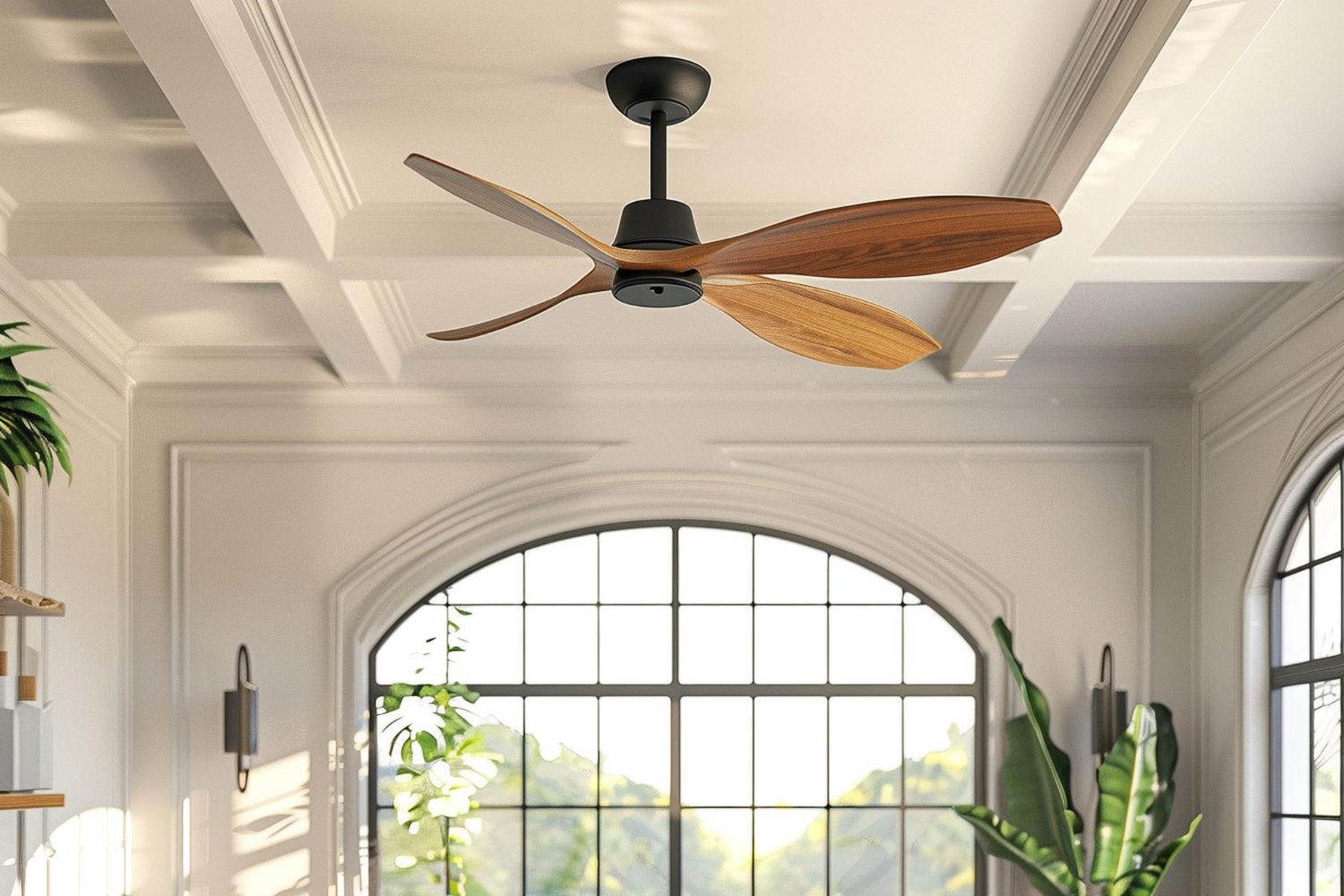
Because a ceiling fan moves and occupies a central plane, it can influence a room more strongly than a small accessory. A portable fan can also become visually prominent when it stands beside a sofa or desk. Choosing well is less about following a trend and more about deciding what role the fan should play.
Some rooms benefit from a quiet fan that recedes into the ceiling. Others can support a contrasting form that becomes part of the design. In both cases, the practical requirements should be fixed before colour and finish narrow the shortlist.
Decide whether the fan should blend or lead
A fan close to the ceiling colour tends to appear lighter and less dominant. This can suit compact rooms, low ceilings, or interiors that already have a strong pendant light or feature wall. A contrasting fan draws attention to its shape and can anchor a simple room.
Neither approach is automatically more sophisticated. Look at the room from the doorway and from the main seating position. Identify the existing focal point, then decide whether the fan should support it or compete for attention.
Use visual scale as well as room measurements
A fan must physically fit, but it should also feel proportionate. Broad blades and a deep motor housing carry more visual weight. Slim blades, a compact housing, and a finish close to the ceiling can feel lighter even at a similar span.
High ceilings and open-plan rooms may accommodate a more sculptural fan. Smaller bedrooms often benefit from a restrained profile that does not make the ceiling feel crowded. The room and fan sizing guide covers the necessary physical checks before making a style decision.
Coordinate colour and finish without overmatching
Choose one or two existing references: ceiling colour, door hardware, lighting, timber tones, window frames, or large furniture. The fan does not need to match every item. Repeating one finish or choosing a calm neutral often creates enough connection.
Black and dark finishes can create definition against a light ceiling. White and pale finishes usually recede. Timber-look blades can add warmth, but the printed or moulded grain should be considered alongside real timber in the room. Metallic finishes may connect with lighting or hardware, though several competing metal tones can make the ceiling busy.
Remember that online colour varies by screen and photography. View a finish sample or physical display when the exact tone matters, and ask how the surface should be cleaned.
Also consider how the fan looks when it is off. Blades are visually clearest when stationary, which may be much of the day in an air-conditioned room. When operating, the housing and overall contrast become more noticeable than fine blade details. A design should work in both states.
Use the surrounding ceiling as part of the decision
Ceiling roses, exposed beams, recessed lighting, curtain pelmets, and air-conditioning grilles all compete for visual space. Sketch their positions before choosing a strongly shaped fan. In a busy ceiling, a quieter finish often creates order. In a plain ceiling, a distinctive fan can provide the missing focal point.
For sloped or double-volume spaces, the downrod and canopy become visible parts of the composition. Confirm that compatible components are available in a suitable finish. A carefully chosen fan can still look unresolved if an improvised rod or mismatched canopy is added later.
A fan with a light changes the composition
An integrated light can reduce ceiling clutter where one central point must provide both functions. It can also make the fan housing more visually prominent and may not replace layered lighting for reading, dining, or atmosphere.
Check light output, colour temperature, dimming, replaceability, control behaviour, and what happens when either function needs repair. If a proprietary light module fails, ask whether a replacement is available separately. Consider glare from the normal viewing angle rather than judging the light only from below.
Build a shortlist that still works
Keep only models that meet room size, clearance, airflow, control, and installation requirements. Compare their finish and blade profile in the context of the room, not on an isolated product image. A simple phone montage can help with scale, but measurements and specifications remain the reliable checks.
Use the main designer fans in Malaysia guide for the full buying process. If you are still deciding whether a permanent fan belongs in the room, compare ceiling, stand, and table fan formats first.
Ask everyone who regularly uses the room about airflow and control preferences. A visually perfect fan that one person finds too strong, difficult to operate, or distracting will not feel successful. Practical agreement is part of good interior planning.
Keep the final specification with the room plan.